I began to notice a pattern of patterns in today’s age, which has had me thinking ever since.
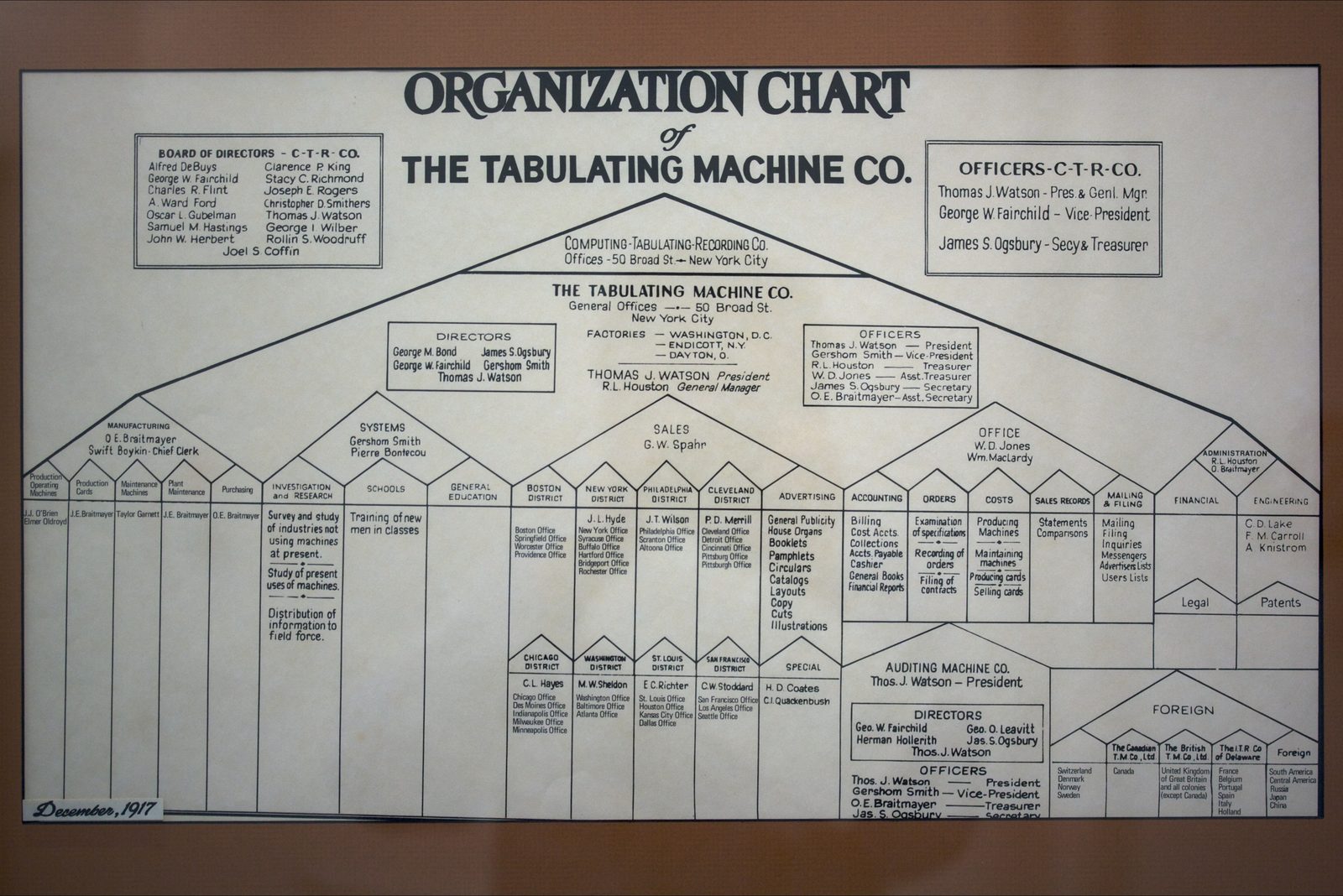
The Tabulating Machine Company’s organization chart, December 1917. Photo by Marcin Wichary, CC BY 2.0.
As the volume of agent work explodes, engineering leverage will concentrate in two areas. One is already getting attention, the other is less clearly named.
⟣ Verification engineering ⟢ (closing the loop): building the tools, systems, and processes that can reliably establish whether a change meets its intended requirements, and produce actionable evidence and signals when it doesn’t.
⟣ Pattern engineering ⟢ (shaping the loops): designing, curating, and reinforcing the conventions, abstractions, tools, and context that improve subsequent work across a codebase and company.
These practices have always mattered, but agents change how frequently those decisions get applied. They repeatedly learn from and extend the patterns already present in a codebase. A good pattern can improve thousands of subsequent changes, while a bad one can repeatedly steer work in the wrong direction.
Henry Binney Hawke finishing a wooden pattern for a gear wheel, to be cast in his foundry in Kapunda, South Australia, circa 1870s. State Library of South Australia.
What it looks like in practice
Pattern engineering means removing sources of recurring misdirection: unit tests that lock in implementation details, stale architecture specs, unclear service ownership. It also means making good work easier: enforcing clear architectural boundaries, making good observability and tracing automatic through shared abstractions, and establishing which context is worth preserving, where it belongs, and when it needs updating.
My favorite example
One pattern that has served our engineering team very well: a single reliable way for a human or cloud agent to configure secrets, run your stack, and test a change in any supported development environment.
A work trial candidate on a fresh Mac and a cloud agent should follow the same setup workflow, with no undocumented steps. Once dependencies and access are provisioned, you should have a running stack in under a minute.
And that workflow should stay current as engineers and their agents add services. It should derive from the same service definitions they already maintain, so supporting a new service doesn’t require someone to remember to update a separate setup system. Every new engineer and agent benefits from that work, and every new service extends it.
revup, the CLI we use to set up every engineer's and agent's machine at Revyl
.revyl/dev.jsonservices, their secret boundaries, and the core profile
New hire · fresh Mac
$./tools/revup/setup.py
revup installed
$revup start core
profile core · from .revyl/dev.json
secrets ← secret store, per boundary
✓frontend
✓backend
✓action-server
✓outbox
✓workflow-worker
✓web-live-step-worker
✓revyl-cli
✓new-service
stack ready
$_Cloud agent 01 · Linux
$./scripts/cloud-bootstrap
revup linked onto PATH
$revup start core
profile core · from .revyl/dev.json
secrets ← secret store, per boundary
✓frontend
✓backend
✓action-server
✓outbox
✓workflow-worker
✓web-live-step-worker
✓revyl-cli
✓new-service
stack ready
$_Cloud agent 02
$./scripts/cloud-bootstrap
revup linked onto PATH
$revup start core
profile core · from .revyl/dev.json
secrets ← secret store, per boundary
✓frontend
✓backend
✓action-server
✓outbox
✓workflow-worker
✓web-live-step-worker
✓revyl-cli
✓new-service
stack ready
Engineer laptop
$./tools/revup/setup.py
revup installed
$revup start core
profile core · from .revyl/dev.json
secrets ← secret store, per boundary
✓frontend
✓backend
✓action-server
✓outbox
✓workflow-worker
✓web-live-step-worker
✓revyl-cli
✓new-service
stack ready
$_Cloud agent 04
$./scripts/cloud-bootstrap
revup linked onto PATH
$revup start core
profile core · from .revyl/dev.json
secrets ← secret store, per boundary
✓frontend
✓backend
✓action-server
✓outbox
✓workflow-worker
✓web-live-step-worker
✓revyl-cli
✓new-service
stack ready
$_Cloud agent 05
$./scripts/cloud-bootstrap
revup linked onto PATH
$revup start core
profile core · from .revyl/dev.json
secrets ← secret store, per boundary
✓frontend
✓backend
✓action-server
✓outbox
✓workflow-worker
✓web-live-step-worker
✓revyl-cli
✓new-service
stack ready
$_Cloud agent 06
$./scripts/cloud-bootstrap
revup linked onto PATH
$revup start core
profile core · from .revyl/dev.json
secrets ← secret store, per boundary
✓frontend
✓backend
✓action-server
✓outbox
✓workflow-worker
✓web-live-step-worker
✓revyl-cli
✓new-service
stack ready
$_Cloud agent 07
$./scripts/cloud-bootstrap
revup linked onto PATH
$revup start core
profile core · from .revyl/dev.json
secrets ← secret store, per boundary
✓frontend
✓backend
✓action-server
✓outbox
✓workflow-worker
✓web-live-step-worker
✓revyl-cli
✓new-service
stack ready
$_Cloud agent 08
$./scripts/cloud-bootstrap
revup linked onto PATH
$revup start core
profile core · from .revyl/dev.json
secrets ← secret store, per boundary
✓frontend
✓backend
✓action-server
✓outbox
✓workflow-worker
✓web-live-step-worker
✓revyl-cli
✓new-service
stack ready
Engineer laptop
$./tools/revup/setup.py
revup installed
$revup start core
profile core · from .revyl/dev.json
secrets ← secret store, per boundary
✓frontend
✓backend
✓action-server
✓outbox
✓workflow-worker
✓web-live-step-worker
✓revyl-cli
✓new-service
stack ready
$_Cloud agent 10
$./scripts/cloud-bootstrap
revup linked onto PATH
$revup start core
profile core · from .revyl/dev.json
secrets ← secret store, per boundary
✓frontend
✓backend
✓action-server
✓outbox
✓workflow-worker
✓web-live-step-worker
✓revyl-cli
✓new-service
stack ready
$_Cloud agent 11
$./scripts/cloud-bootstrap
revup linked onto PATH
$revup start core
profile core · from .revyl/dev.json
secrets ← secret store, per boundary
✓frontend
✓backend
✓action-server
✓outbox
✓workflow-worker
✓web-live-step-worker
✓revyl-cli
✓new-service
stack ready
$_Cloud agent 12
$./scripts/cloud-bootstrap
revup linked onto PATH
$revup start core
profile core · from .revyl/dev.json
secrets ← secret store, per boundary
✓frontend
✓backend
✓action-server
✓outbox
✓workflow-worker
✓web-live-step-worker
✓revyl-cli
✓new-service
stack ready
$_Cloud agent 13
$./scripts/cloud-bootstrap
revup linked onto PATH
$revup start core
profile core · from .revyl/dev.json
secrets ← secret store, per boundary
✓frontend
✓backend
✓action-server
✓outbox
✓workflow-worker
✓web-live-step-worker
✓revyl-cli
✓new-service
stack ready
$_Cloud agent 14
$./scripts/cloud-bootstrap
revup linked onto PATH
$revup start core
profile core · from .revyl/dev.json
secrets ← secret store, per boundary
✓frontend
✓backend
✓action-server
✓outbox
✓workflow-worker
✓web-live-step-worker
✓revyl-cli
✓new-service
stack ready
Engineer laptop
$./tools/revup/setup.py
revup installed
$revup start core
profile core · from .revyl/dev.json
secrets ← secret store, per boundary
✓frontend
✓backend
✓action-server
✓outbox
✓workflow-worker
✓web-live-step-worker
✓revyl-cli
✓new-service
stack ready
$_Cloud agent 16
$./scripts/cloud-bootstrap
revup linked onto PATH
$revup start core
profile core · from .revyl/dev.json
secrets ← secret store, per boundary
✓frontend
✓backend
✓action-server
✓outbox
✓workflow-worker
✓web-live-step-worker
✓revyl-cli
✓new-service
stack ready
$_Cloud agent 17
$./scripts/cloud-bootstrap
revup linked onto PATH
$revup start core
profile core · from .revyl/dev.json
secrets ← secret store, per boundary
✓frontend
✓backend
✓action-server
✓outbox
✓workflow-worker
✓web-live-step-worker
✓revyl-cli
✓new-service
stack ready
$_Cloud agent 18
$./scripts/cloud-bootstrap
revup linked onto PATH
$revup start core
profile core · from .revyl/dev.json
secrets ← secret store, per boundary
✓frontend
✓backend
✓action-server
✓outbox
✓workflow-worker
✓web-live-step-worker
✓revyl-cli
✓new-service
stack ready
$_Cloud agent 19
$./scripts/cloud-bootstrap
revup linked onto PATH
$revup start core
profile core · from .revyl/dev.json
secrets ← secret store, per boundary
✓frontend
✓backend
✓action-server
✓outbox
✓workflow-worker
✓web-live-step-worker
✓revyl-cli
✓new-service
stack ready
$_Cloud agent 20
$./scripts/cloud-bootstrap
revup linked onto PATH
$revup start core
profile core · from .revyl/dev.json
secrets ← secret store, per boundary
✓frontend
✓backend
✓action-server
✓outbox
✓workflow-worker
✓web-live-step-worker
✓revyl-cli
✓new-service
stack ready
Engineer laptop
$./tools/revup/setup.py
revup installed
$revup start core
profile core · from .revyl/dev.json
secrets ← secret store, per boundary
✓frontend
✓backend
✓action-server
✓outbox
✓workflow-worker
✓web-live-step-worker
✓revyl-cli
✓new-service
stack ready
$_Cloud agent 22
$./scripts/cloud-bootstrap
revup linked onto PATH
$revup start core
profile core · from .revyl/dev.json
secrets ← secret store, per boundary
✓frontend
✓backend
✓action-server
✓outbox
✓workflow-worker
✓web-live-step-worker
✓revyl-cli
✓new-service
stack ready
$_Cloud agent 23
$./scripts/cloud-bootstrap
revup linked onto PATH
$revup start core
profile core · from .revyl/dev.json
secrets ← secret store, per boundary
✓frontend
✓backend
✓action-server
✓outbox
✓workflow-worker
✓web-live-step-worker
✓revyl-cli
✓new-service
stack ready
$_Cloud agent 24
$./scripts/cloud-bootstrap
revup linked onto PATH
$revup start core
profile core · from .revyl/dev.json
secrets ← secret store, per boundary
✓frontend
✓backend
✓action-server
✓outbox
✓workflow-worker
✓web-live-step-worker
✓revyl-cli
✓new-service
stack ready
$_Cloud agent 25
$./scripts/cloud-bootstrap
revup linked onto PATH
$revup start core
profile core · from .revyl/dev.json
secrets ← secret store, per boundary
✓frontend
✓backend
✓action-server
✓outbox
✓workflow-worker
✓web-live-step-worker
✓revyl-cli
✓new-service
stack ready
$_Cloud agent 26
$./scripts/cloud-bootstrap
revup linked onto PATH
$revup start core
profile core · from .revyl/dev.json
secrets ← secret store, per boundary
✓frontend
✓backend
✓action-server
✓outbox
✓workflow-worker
✓web-live-step-worker
✓revyl-cli
✓new-service
stack ready
Engineer laptop
$./tools/revup/setup.py
revup installed
$revup start core
profile core · from .revyl/dev.json
secrets ← secret store, per boundary
✓frontend
✓backend
✓action-server
✓outbox
✓workflow-worker
✓web-live-step-worker
✓revyl-cli
✓new-service
stack ready
$_Cloud agent 28
$./scripts/cloud-bootstrap
revup linked onto PATH
$revup start core
profile core · from .revyl/dev.json
secrets ← secret store, per boundary
✓frontend
✓backend
✓action-server
✓outbox
✓workflow-worker
✓web-live-step-worker
✓revyl-cli
✓new-service
stack ready
$_Cloud agent 29
$./scripts/cloud-bootstrap
revup linked onto PATH
$revup start core
profile core · from .revyl/dev.json
secrets ← secret store, per boundary
✓frontend
✓backend
✓action-server
✓outbox
✓workflow-worker
✓web-live-step-worker
✓revyl-cli
✓new-service
stack ready
$_Cloud agent 30
$./scripts/cloud-bootstrap
revup linked onto PATH
$revup start core
profile core · from .revyl/dev.json
secrets ← secret store, per boundary
✓frontend
✓backend
✓action-server
✓outbox
✓workflow-worker
✓web-live-step-worker
✓revyl-cli
✓new-service
stack ready
$_Cloud agent 31
$./scripts/cloud-bootstrap
revup linked onto PATH
$revup start core
profile core · from .revyl/dev.json
secrets ← secret store, per boundary
✓frontend
✓backend
✓action-server
✓outbox
✓workflow-worker
✓web-live-step-worker
✓revyl-cli
✓new-service
stack ready
$_Cloud agent 32
$./scripts/cloud-bootstrap
revup linked onto PATH
$revup start core
profile core · from .revyl/dev.json
secrets ← secret store, per boundary
✓frontend
✓backend
✓action-server
✓outbox
✓workflow-worker
✓web-live-step-worker
✓revyl-cli
✓new-service
stack ready
Engineer laptop
$./tools/revup/setup.py
revup installed
$revup start core
profile core · from .revyl/dev.json
secrets ← secret store, per boundary
✓frontend
✓backend
✓action-server
✓outbox
✓workflow-worker
✓web-live-step-worker
✓revyl-cli
✓new-service
stack ready
$_Cloud agent 34
$./scripts/cloud-bootstrap
revup linked onto PATH
$revup start core
profile core · from .revyl/dev.json
secrets ← secret store, per boundary
✓frontend
✓backend
✓action-server
✓outbox
✓workflow-worker
✓web-live-step-worker
✓revyl-cli
✓new-service
stack ready
$_Cloud agent 35
$./scripts/cloud-bootstrap
revup linked onto PATH
$revup start core
profile core · from .revyl/dev.json
secrets ← secret store, per boundary
✓frontend
✓backend
✓action-server
✓outbox
✓workflow-worker
✓web-live-step-worker
✓revyl-cli
✓new-service
stack ready
$_Cloud agent 36
$./scripts/cloud-bootstrap
revup linked onto PATH
$revup start core
profile core · from .revyl/dev.json
secrets ← secret store, per boundary
✓frontend
✓backend
✓action-server
✓outbox
✓workflow-worker
✓web-live-step-worker
✓revyl-cli
✓new-service
stack ready
$_Cloud agent 37
$./scripts/cloud-bootstrap
revup linked onto PATH
$revup start core
profile core · from .revyl/dev.json
secrets ← secret store, per boundary
✓frontend
✓backend
✓action-server
✓outbox
✓workflow-worker
✓web-live-step-worker
✓revyl-cli
✓new-service
stack ready
$_Cloud agent 38
$./scripts/cloud-bootstrap
revup linked onto PATH
$revup start core
profile core · from .revyl/dev.json
secrets ← secret store, per boundary
✓frontend
✓backend
✓action-server
✓outbox
✓workflow-worker
✓web-live-step-worker
✓revyl-cli
✓new-service
stack ready
Engineer laptop
$./tools/revup/setup.py
revup installed
$revup start core
profile core · from .revyl/dev.json
secrets ← secret store, per boundary
✓frontend
✓backend
✓action-server
✓outbox
✓workflow-worker
✓web-live-step-worker
✓revyl-cli
✓new-service
stack ready
$_Cloud agent 40
$./scripts/cloud-bootstrap
revup linked onto PATH
$revup start core
profile core · from .revyl/dev.json
secrets ← secret store, per boundary
✓frontend
✓backend
✓action-server
✓outbox
✓workflow-worker
✓web-live-step-worker
✓revyl-cli
✓new-service
stack ready
$_Cloud agent 41
$./scripts/cloud-bootstrap
revup linked onto PATH
$revup start core
profile core · from .revyl/dev.json
secrets ← secret store, per boundary
✓frontend
✓backend
✓action-server
✓outbox
✓workflow-worker
✓web-live-step-worker
✓revyl-cli
✓new-service
stack ready
$_Cloud agent 42
$./scripts/cloud-bootstrap
revup linked onto PATH
$revup start core
profile core · from .revyl/dev.json
secrets ← secret store, per boundary
✓frontend
✓backend
✓action-server
✓outbox
✓workflow-worker
✓web-live-step-worker
✓revyl-cli
✓new-service
stack ready
$_Cloud agent 43
$./scripts/cloud-bootstrap
revup linked onto PATH
$revup start core
profile core · from .revyl/dev.json
secrets ← secret store, per boundary
✓frontend
✓backend
✓action-server
✓outbox
✓workflow-worker
✓web-live-step-worker
✓revyl-cli
✓new-service
stack ready
$_Cloud agent 44
$./scripts/cloud-bootstrap
revup linked onto PATH
$revup start core
profile core · from .revyl/dev.json
secrets ← secret store, per boundary
✓frontend
✓backend
✓action-server
✓outbox
✓workflow-worker
✓web-live-step-worker
✓revyl-cli
✓new-service
stack ready
Engineer laptop
$./tools/revup/setup.py
revup installed
$revup start core
profile core · from .revyl/dev.json
secrets ← secret store, per boundary
✓frontend
✓backend
✓action-server
✓outbox
✓workflow-worker
✓web-live-step-worker
✓revyl-cli
✓new-service
stack ready
$_Cloud agent 46
$./scripts/cloud-bootstrap
revup linked onto PATH
$revup start core
profile core · from .revyl/dev.json
secrets ← secret store, per boundary
✓frontend
✓backend
✓action-server
✓outbox
✓workflow-worker
✓web-live-step-worker
✓revyl-cli
✓new-service
stack ready
$_Cloud agent 47
$./scripts/cloud-bootstrap
revup linked onto PATH
$revup start core
profile core · from .revyl/dev.json
secrets ← secret store, per boundary
✓frontend
✓backend
✓action-server
✓outbox
✓workflow-worker
✓web-live-step-worker
✓revyl-cli
✓new-service
stack ready
$_Cloud agent 48
$./scripts/cloud-bootstrap
revup linked onto PATH
$revup start core
profile core · from .revyl/dev.json
secrets ← secret store, per boundary
✓frontend
✓backend
✓action-server
✓outbox
✓workflow-worker
✓web-live-step-worker
✓revyl-cli
✓new-service
stack ready
$_Cloud agent 49
$./scripts/cloud-bootstrap
revup linked onto PATH
$revup start core
profile core · from .revyl/dev.json
secrets ← secret store, per boundary
✓frontend
✓backend
✓action-server
✓outbox
✓workflow-worker
✓web-live-step-worker
✓revyl-cli
✓new-service
stack ready
$_Cloud agent 50
$./scripts/cloud-bootstrap
revup linked onto PATH
$revup start core
profile core · from .revyl/dev.json
secrets ← secret store, per boundary
✓frontend
✓backend
✓action-server
✓outbox
✓workflow-worker
✓web-live-step-worker
✓revyl-cli
✓new-service
stack ready
Engineer laptop
$./tools/revup/setup.py
revup installed
$revup start core
profile core · from .revyl/dev.json
secrets ← secret store, per boundary
✓frontend
✓backend
✓action-server
✓outbox
✓workflow-worker
✓web-live-step-worker
✓revyl-cli
✓new-service
stack ready
$_Cloud agent 52
$./scripts/cloud-bootstrap
revup linked onto PATH
$revup start core
profile core · from .revyl/dev.json
secrets ← secret store, per boundary
✓frontend
✓backend
✓action-server
✓outbox
✓workflow-worker
✓web-live-step-worker
✓revyl-cli
✓new-service
stack ready
$_Cloud agent 53
$./scripts/cloud-bootstrap
revup linked onto PATH
$revup start core
profile core · from .revyl/dev.json
secrets ← secret store, per boundary
✓frontend
✓backend
✓action-server
✓outbox
✓workflow-worker
✓web-live-step-worker
✓revyl-cli
✓new-service
stack ready
$_Cloud agent 54
$./scripts/cloud-bootstrap
revup linked onto PATH
$revup start core
profile core · from .revyl/dev.json
secrets ← secret store, per boundary
✓frontend
✓backend
✓action-server
✓outbox
✓workflow-worker
✓web-live-step-worker
✓revyl-cli
✓new-service
stack ready
$_Cloud agent 55
$./scripts/cloud-bootstrap
revup linked onto PATH
$revup start core
profile core · from .revyl/dev.json
secrets ← secret store, per boundary
✓frontend
✓backend
✓action-server
✓outbox
✓workflow-worker
✓web-live-step-worker
✓revyl-cli
✓new-service
stack ready
$_Cloud agent 56
$./scripts/cloud-bootstrap
revup linked onto PATH
$revup start core
profile core · from .revyl/dev.json
secrets ← secret store, per boundary
✓frontend
✓backend
✓action-server
✓outbox
✓workflow-worker
✓web-live-step-worker
✓revyl-cli
✓new-service
stack ready
Engineer laptop
$./tools/revup/setup.py
revup installed
$revup start core
profile core · from .revyl/dev.json
secrets ← secret store, per boundary
✓frontend
✓backend
✓action-server
✓outbox
✓workflow-worker
✓web-live-step-worker
✓revyl-cli
✓new-service
stack ready
$_Cloud agent 58
$./scripts/cloud-bootstrap
revup linked onto PATH
$revup start core
profile core · from .revyl/dev.json
secrets ← secret store, per boundary
✓frontend
✓backend
✓action-server
✓outbox
✓workflow-worker
✓web-live-step-worker
✓revyl-cli
✓new-service
stack ready
$_Cloud agent 59
$./scripts/cloud-bootstrap
revup linked onto PATH
$revup start core
profile core · from .revyl/dev.json
secrets ← secret store, per boundary
✓frontend
✓backend
✓action-server
✓outbox
✓workflow-worker
✓web-live-step-worker
✓revyl-cli
✓new-service
stack ready
$_Cloud agent 60
$./scripts/cloud-bootstrap
revup linked onto PATH
$revup start core
profile core · from .revyl/dev.json
secrets ← secret store, per boundary
✓frontend
✓backend
✓action-server
✓outbox
✓workflow-worker
✓web-live-step-worker
✓revyl-cli
✓new-service
stack ready
$_Cloud agent 61
$./scripts/cloud-bootstrap
revup linked onto PATH
$revup start core
profile core · from .revyl/dev.json
secrets ← secret store, per boundary
✓frontend
✓backend
✓action-server
✓outbox
✓workflow-worker
✓web-live-step-worker
✓revyl-cli
✓new-service
stack ready
$_Cloud agent 62
$./scripts/cloud-bootstrap
revup linked onto PATH
$revup start core
profile core · from .revyl/dev.json
secrets ← secret store, per boundary
✓frontend
✓backend
✓action-server
✓outbox
✓workflow-worker
✓web-live-step-worker
✓revyl-cli
✓new-service
stack ready
Engineer laptop
$./tools/revup/setup.py
revup installed
$revup start core
profile core · from .revyl/dev.json
secrets ← secret store, per boundary
✓frontend
✓backend
✓action-server
✓outbox
✓workflow-worker
✓web-live-step-worker
✓revyl-cli
✓new-service
stack ready
$_Cloud agent 64
$./scripts/cloud-bootstrap
revup linked onto PATH
$revup start core
profile core · from .revyl/dev.json
secrets ← secret store, per boundary
✓frontend
✓backend
✓action-server
✓outbox
✓workflow-worker
✓web-live-step-worker
✓revyl-cli
✓new-service
stack ready
$_Cloud agent 65
$./scripts/cloud-bootstrap
revup linked onto PATH
$revup start core
profile core · from .revyl/dev.json
secrets ← secret store, per boundary
✓frontend
✓backend
✓action-server
✓outbox
✓workflow-worker
✓web-live-step-worker
✓revyl-cli
✓new-service
stack ready
$_Cloud agent 66
$./scripts/cloud-bootstrap
revup linked onto PATH
$revup start core
profile core · from .revyl/dev.json
secrets ← secret store, per boundary
✓frontend
✓backend
✓action-server
✓outbox
✓workflow-worker
✓web-live-step-worker
✓revyl-cli
✓new-service
stack ready
$_Cloud agent 67
$./scripts/cloud-bootstrap
revup linked onto PATH
$revup start core
profile core · from .revyl/dev.json
secrets ← secret store, per boundary
✓frontend
✓backend
✓action-server
✓outbox
✓workflow-worker
✓web-live-step-worker
✓revyl-cli
✓new-service
stack ready
$_Cloud agent 68
$./scripts/cloud-bootstrap
revup linked onto PATH
$revup start core
profile core · from .revyl/dev.json
secrets ← secret store, per boundary
✓frontend
✓backend
✓action-server
✓outbox
✓workflow-worker
✓web-live-step-worker
✓revyl-cli
✓new-service
stack ready
Engineer laptop
$./tools/revup/setup.py
revup installed
$revup start core
profile core · from .revyl/dev.json
secrets ← secret store, per boundary
✓frontend
✓backend
✓action-server
✓outbox
✓workflow-worker
✓web-live-step-worker
✓revyl-cli
✓new-service
stack ready
$_Cloud agent 70
$./scripts/cloud-bootstrap
revup linked onto PATH
$revup start core
profile core · from .revyl/dev.json
secrets ← secret store, per boundary
✓frontend
✓backend
✓action-server
✓outbox
✓workflow-worker
✓web-live-step-worker
✓revyl-cli
✓new-service
stack ready
$_Cloud agent 71
$./scripts/cloud-bootstrap
revup linked onto PATH
$revup start core
profile core · from .revyl/dev.json
secrets ← secret store, per boundary
✓frontend
✓backend
✓action-server
✓outbox
✓workflow-worker
✓web-live-step-worker
✓revyl-cli
✓new-service
stack ready
$_Cloud agent 72
$./scripts/cloud-bootstrap
revup linked onto PATH
$revup start core
profile core · from .revyl/dev.json
secrets ← secret store, per boundary
✓frontend
✓backend
✓action-server
✓outbox
✓workflow-worker
✓web-live-step-worker
✓revyl-cli
✓new-service
stack ready
$_Cloud agent 73
$./scripts/cloud-bootstrap
revup linked onto PATH
$revup start core
profile core · from .revyl/dev.json
secrets ← secret store, per boundary
✓frontend
✓backend
✓action-server
✓outbox
✓workflow-worker
✓web-live-step-worker
✓revyl-cli
✓new-service
stack ready
$_Cloud agent 74
$./scripts/cloud-bootstrap
revup linked onto PATH
$revup start core
profile core · from .revyl/dev.json
secrets ← secret store, per boundary
✓frontend
✓backend
✓action-server
✓outbox
✓workflow-worker
✓web-live-step-worker
✓revyl-cli
✓new-service
stack ready
Engineer laptop
$./tools/revup/setup.py
revup installed
$revup start core
profile core · from .revyl/dev.json
secrets ← secret store, per boundary
✓frontend
✓backend
✓action-server
✓outbox
✓workflow-worker
✓web-live-step-worker
✓revyl-cli
✓new-service
stack ready
$_Cloud agent 76
$./scripts/cloud-bootstrap
revup linked onto PATH
$revup start core
profile core · from .revyl/dev.json
secrets ← secret store, per boundary
✓frontend
✓backend
✓action-server
✓outbox
✓workflow-worker
✓web-live-step-worker
✓revyl-cli
✓new-service
stack ready
$_Cloud agent 77
$./scripts/cloud-bootstrap
revup linked onto PATH
$revup start core
profile core · from .revyl/dev.json
secrets ← secret store, per boundary
✓frontend
✓backend
✓action-server
✓outbox
✓workflow-worker
✓web-live-step-worker
✓revyl-cli
✓new-service
stack ready
$_Cloud agent 78
$./scripts/cloud-bootstrap
revup linked onto PATH
$revup start core
profile core · from .revyl/dev.json
secrets ← secret store, per boundary
✓frontend
✓backend
✓action-server
✓outbox
✓workflow-worker
✓web-live-step-worker
✓revyl-cli
✓new-service
stack ready
$_Cloud agent 79
$./scripts/cloud-bootstrap
revup linked onto PATH
$revup start core
profile core · from .revyl/dev.json
secrets ← secret store, per boundary
✓frontend
✓backend
✓action-server
✓outbox
✓workflow-worker
✓web-live-step-worker
✓revyl-cli
✓new-service
stack ready
$_Cloud agent 80
$./scripts/cloud-bootstrap
revup linked onto PATH
$revup start core
profile core · from .revyl/dev.json
secrets ← secret store, per boundary
✓frontend
✓backend
✓action-server
✓outbox
✓workflow-worker
✓web-live-step-worker
✓revyl-cli
✓new-service
stack ready
Engineer laptop
$./tools/revup/setup.py
revup installed
$revup start core
profile core · from .revyl/dev.json
secrets ← secret store, per boundary
✓frontend
✓backend
✓action-server
✓outbox
✓workflow-worker
✓web-live-step-worker
✓revyl-cli
✓new-service
stack ready
$_Cloud agent 82
$./scripts/cloud-bootstrap
revup linked onto PATH
$revup start core
profile core · from .revyl/dev.json
secrets ← secret store, per boundary
✓frontend
✓backend
✓action-server
✓outbox
✓workflow-worker
✓web-live-step-worker
✓revyl-cli
✓new-service
stack ready
$_Cloud agent 83
$./scripts/cloud-bootstrap
revup linked onto PATH
$revup start core
profile core · from .revyl/dev.json
secrets ← secret store, per boundary
✓frontend
✓backend
✓action-server
✓outbox
✓workflow-worker
✓web-live-step-worker
✓revyl-cli
✓new-service
stack ready
$_Cloud agent 84
$./scripts/cloud-bootstrap
revup linked onto PATH
$revup start core
profile core · from .revyl/dev.json
secrets ← secret store, per boundary
✓frontend
✓backend
✓action-server
✓outbox
✓workflow-worker
✓web-live-step-worker
✓revyl-cli
✓new-service
stack ready
$_Cloud agent 85
$./scripts/cloud-bootstrap
revup linked onto PATH
$revup start core
profile core · from .revyl/dev.json
secrets ← secret store, per boundary
✓frontend
✓backend
✓action-server
✓outbox
✓workflow-worker
✓web-live-step-worker
✓revyl-cli
✓new-service
stack ready
$_Cloud agent 86
$./scripts/cloud-bootstrap
revup linked onto PATH
$revup start core
profile core · from .revyl/dev.json
secrets ← secret store, per boundary
✓frontend
✓backend
✓action-server
✓outbox
✓workflow-worker
✓web-live-step-worker
✓revyl-cli
✓new-service
stack ready
Engineer laptop
$./tools/revup/setup.py
revup installed
$revup start core
profile core · from .revyl/dev.json
secrets ← secret store, per boundary
✓frontend
✓backend
✓action-server
✓outbox
✓workflow-worker
✓web-live-step-worker
✓revyl-cli
✓new-service
stack ready
$_Cloud agent 88
$./scripts/cloud-bootstrap
revup linked onto PATH
$revup start core
profile core · from .revyl/dev.json
secrets ← secret store, per boundary
✓frontend
✓backend
✓action-server
✓outbox
✓workflow-worker
✓web-live-step-worker
✓revyl-cli
✓new-service
stack ready
$_Cloud agent 89
$./scripts/cloud-bootstrap
revup linked onto PATH
$revup start core
profile core · from .revyl/dev.json
secrets ← secret store, per boundary
✓frontend
✓backend
✓action-server
✓outbox
✓workflow-worker
✓web-live-step-worker
✓revyl-cli
✓new-service
stack ready
$_Cloud agent 90
$./scripts/cloud-bootstrap
revup linked onto PATH
$revup start core
profile core · from .revyl/dev.json
secrets ← secret store, per boundary
✓frontend
✓backend
✓action-server
✓outbox
✓workflow-worker
✓web-live-step-worker
✓revyl-cli
✓new-service
stack ready
$_Cloud agent 91
$./scripts/cloud-bootstrap
revup linked onto PATH
$revup start core
profile core · from .revyl/dev.json
secrets ← secret store, per boundary
✓frontend
✓backend
✓action-server
✓outbox
✓workflow-worker
✓web-live-step-worker
✓revyl-cli
✓new-service
stack ready
$_Cloud agent 92
$./scripts/cloud-bootstrap
revup linked onto PATH
$revup start core
profile core · from .revyl/dev.json
secrets ← secret store, per boundary
✓frontend
✓backend
✓action-server
✓outbox
✓workflow-worker
✓web-live-step-worker
✓revyl-cli
✓new-service
stack ready
Engineer laptop
$./tools/revup/setup.py
revup installed
$revup start core
profile core · from .revyl/dev.json
secrets ← secret store, per boundary
✓frontend
✓backend
✓action-server
✓outbox
✓workflow-worker
✓web-live-step-worker
✓revyl-cli
✓new-service
stack ready
$_Cloud agent 94
$./scripts/cloud-bootstrap
revup linked onto PATH
$revup start core
profile core · from .revyl/dev.json
secrets ← secret store, per boundary
✓frontend
✓backend
✓action-server
✓outbox
✓workflow-worker
✓web-live-step-worker
✓revyl-cli
✓new-service
stack ready
$_Cloud agent 95
$./scripts/cloud-bootstrap
revup linked onto PATH
$revup start core
profile core · from .revyl/dev.json
secrets ← secret store, per boundary
✓frontend
✓backend
✓action-server
✓outbox
✓workflow-worker
✓web-live-step-worker
✓revyl-cli
✓new-service
stack ready
$_Cloud agent 96
$./scripts/cloud-bootstrap
revup linked onto PATH
$revup start core
profile core · from .revyl/dev.json
secrets ← secret store, per boundary
✓frontend
✓backend
✓action-server
✓outbox
✓workflow-worker
✓web-live-step-worker
✓revyl-cli
✓new-service
stack ready
$_Cloud agent 97
$./scripts/cloud-bootstrap
revup linked onto PATH
$revup start core
profile core · from .revyl/dev.json
secrets ← secret store, per boundary
✓frontend
✓backend
✓action-server
✓outbox
✓workflow-worker
✓web-live-step-worker
✓revyl-cli
✓new-service
stack ready
$_Cloud agent 98
$./scripts/cloud-bootstrap
revup linked onto PATH
$revup start core
profile core · from .revyl/dev.json
secrets ← secret store, per boundary
✓frontend
✓backend
✓action-server
✓outbox
✓workflow-worker
✓web-live-step-worker
✓revyl-cli
✓new-service
stack ready
Engineer laptop
$./tools/revup/setup.py
revup installed
$revup start core
profile core · from .revyl/dev.json
secrets ← secret store, per boundary
✓frontend
✓backend
✓action-server
✓outbox
✓workflow-worker
✓web-live-step-worker
✓revyl-cli
✓new-service
stack ready
21020100machines, one command, the same stack
We built this at Revyl, originally for new hires. The same pattern extended to cloud agents, and it's what let us drastically scale our verification into the cloud agent era.
Pattern engineers
I think of people like @poteto and @dexhorthy as pattern engineers. Their work turns engineering judgment into principles and workflows that other people and agents can reuse. pstack turns engineering patterns, including verification itself, into reusable agent skills. That’s what makes it so useful. It’s a crash course in pattern engineering with the batteries included.
Two companies, side by side
Now put two companies with access to an unlimited array of agents side by side.
One repeatedly spends time trying to rediscover setup, correcting the same mistakes, figuring out whether work is done. The other turns those lessons into reliable tools, defaults, and verification pipelines.
The assembly line at the Ford Motor Company’s Highland Park plant, 1913. Library of Congress.
As the volume of agent work grows, that difference compounds massively. The best teams know where to invest.