Airbnb Explore: Logged Out (Home tab) to Search: Services flow
Airbnb's explore: logged out (home tab) to search: services flow moves users from Explore: Logged Out (Home tab) to Search: Services across 3 mapped iOS app screens. Use this path for mobile UX teardown work, QA coverage planning, and AI agent navigation context.
Why the Airbnb Explore: Logged Out (Home tab) to Search: Services flow matters
Navigation patternThis flow shows how Airbnb carries a user from Explore: Logged Out (Home tab) to Search: Services across real app states.
Testing coverageThe screen path gives QA and product teams concrete screens to verify, including visible UI density, transition order, and repeated mobile states.
Agent groundingAtlas makes this journey usable as navigation context for AI agents that need to understand the app before executing mobile tasks.
Screen path
Airbnb Explore: Logged Out (Home tab) to Search: Services screenshots
This page is a crawlable breakdown of one real mobile journey. The screenshots, step labels, and element counts make the Airbnb Explore: Logged Out (Home tab) to Search: Services path easier to compare against competing apps, reproduce during QA planning, and reuse as structured navigation context for app automation.
01
Explore: Logged Out (Home tab)
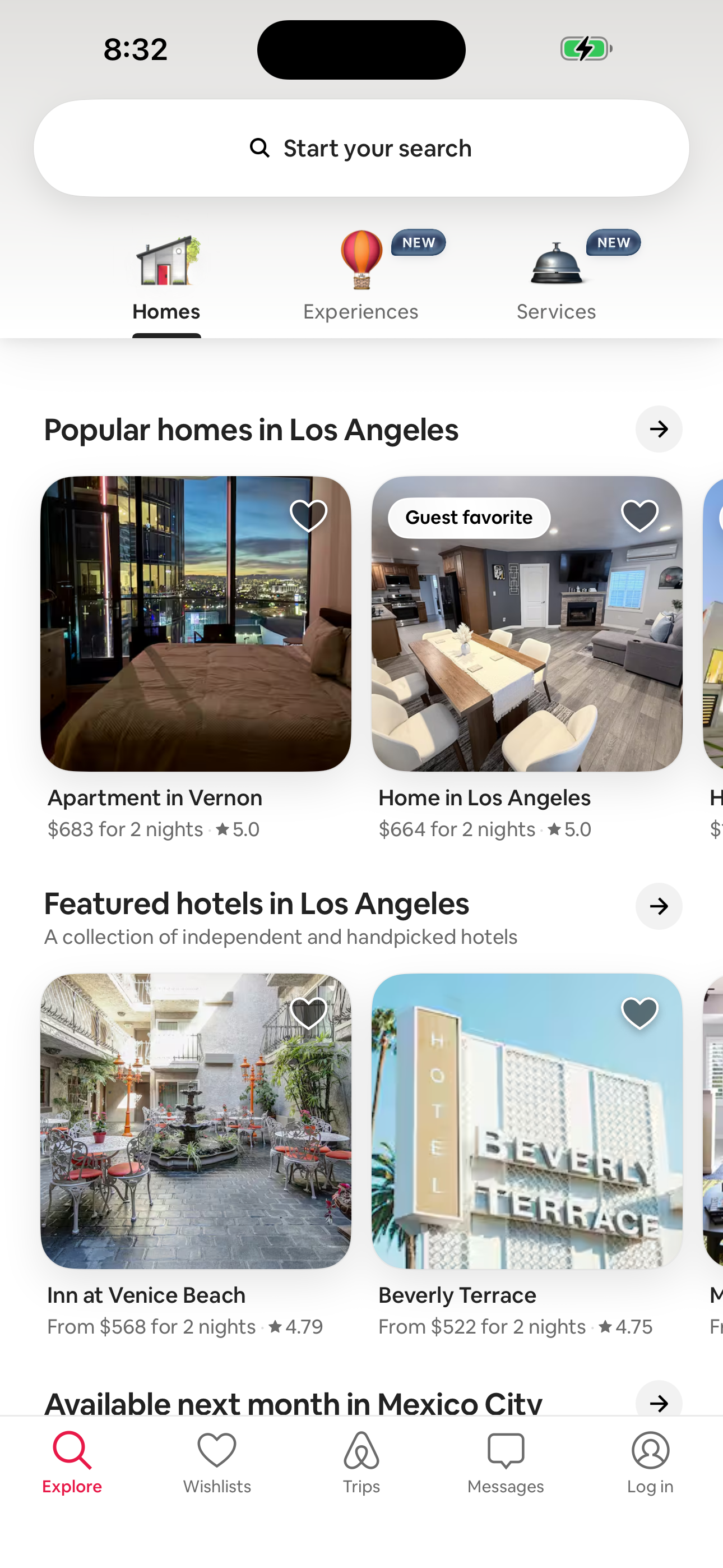
Step 1 in the Airbnb Explore: Logged Out (Home tab) to Search: Services flow. Atlas detected 17 UI elements on this screen.
Explore: Logged Out (Home tab)
02
Explore: Services tab
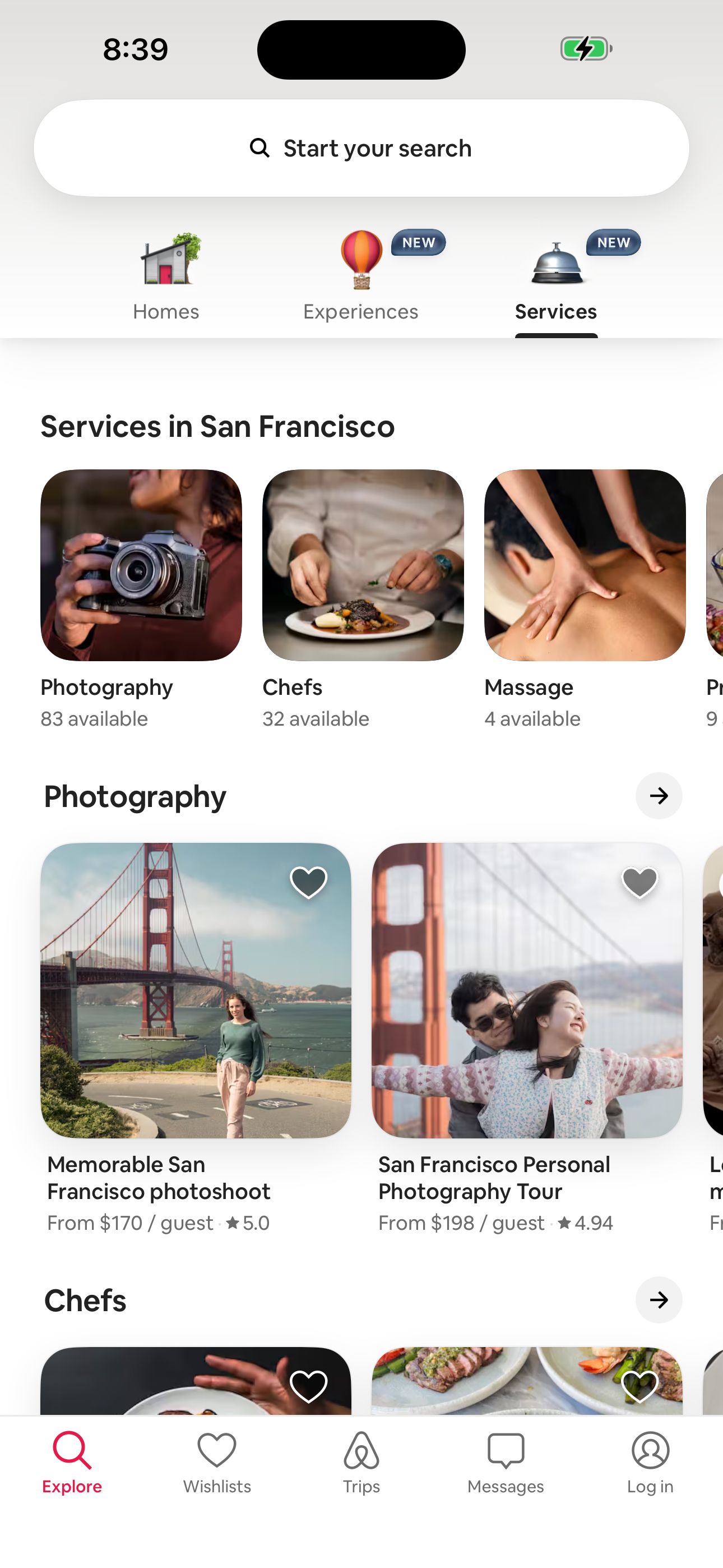
Step 2 in the Airbnb Explore: Logged Out (Home tab) to Search: Services flow. Atlas detected 17 UI elements on this screen.
Explore: Services tab
03
Search: Services
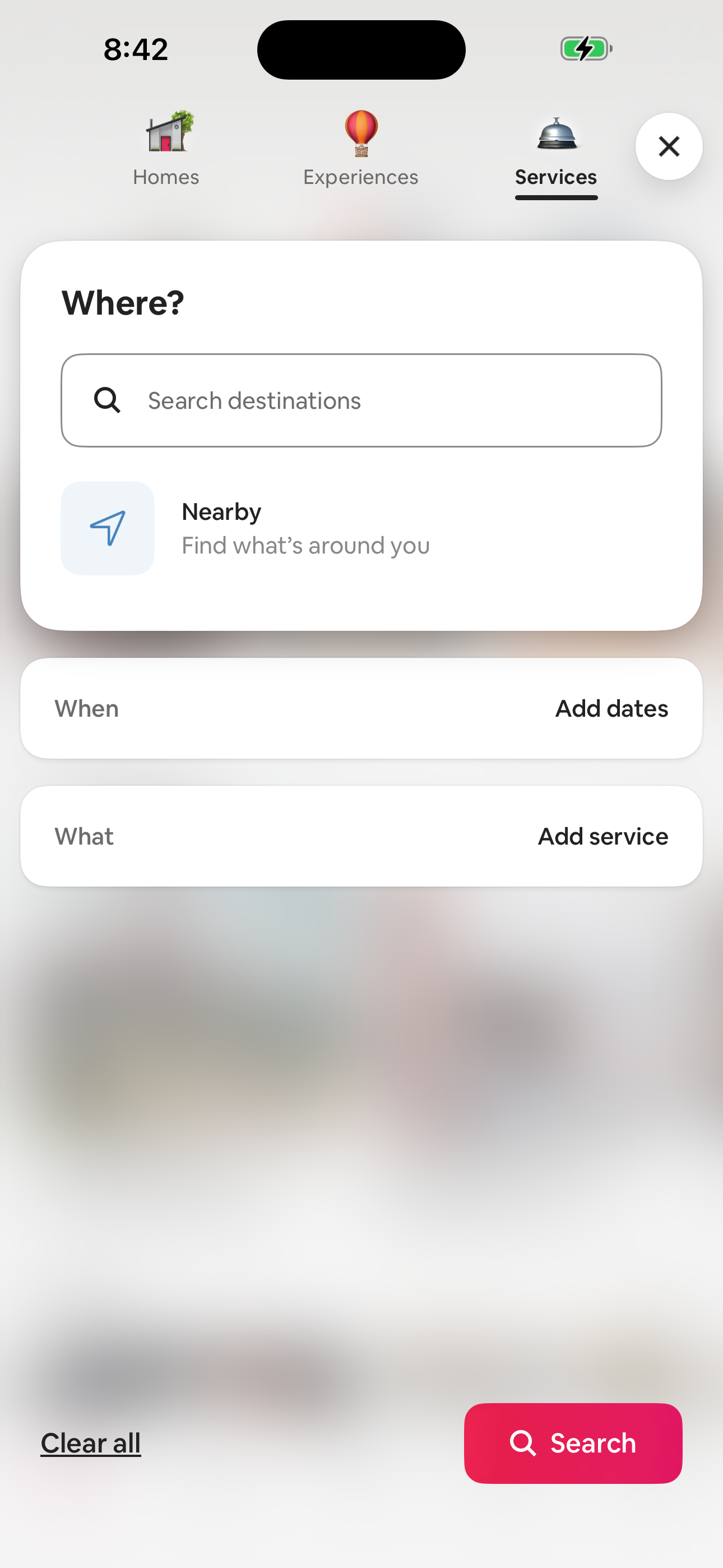
Step 3 in the Airbnb Explore: Logged Out (Home tab) to Search: Services flow. Atlas detected 10 UI elements on this screen.
Search: Services
How to use it
Apply this flow to product and testing work
For product researchUse the ordered path to understand which screens appear before and after key actions, how much interface density the user sees, and where the app introduces extra decisions or interruptions.
For QA planningTurn each screen in the path into a coverage checkpoint. The screenshot sequence helps teams verify expected states, navigation transitions, and UI inventory without manually rediscovering the journey.
 Revyl
Revyl